
How to Choose a Trustworthy Locksmith in Edmonton — And What to Watch Out For
Pick the right one before you’re the one getting picked
Whether you're locked out of your home at midnight, need to rekey after a move, or want to upgrade your home security, finding a trustworthy locksmith matters more than most people realize — until they're standing in a parking lot at 11 PM watching a stranger drill their front door. A good locksmith is licensed, transparent about pricing, and willing to answer your questions before starting work – good locksmiths, like Ace, are certified tradespeople and charge what we charge for a reason.
The best time to find one is before you need one — add a trusted name to your contacts so that when you are standing in a parking lot at 11 PM, you're not just Googling whoever has the biggest ad.
Here's what to keep in mind before you call.
1. Licensing and Credentials
In Alberta, locksmithing is a regulated trade. To legally work as a locksmith, individuals must be licensed by the Government of Alberta under the Security Services and Investigators Act (SSIA) and be a registered apprentice or a certified journey person. Before hiring anyone, ask if they are licensed. A reputable locksmith won't hesitate to show credentials. If they dodge the question, move on.
Look for membership in professional associations as well — these organizations typically hold members to a code of ethics and provide ongoing training.
2. Local, Established Business
A physical address matters. Many fly-by-night operations advertise locally but are actually call centres dispatching untrained contractors from out of town. Search the business name, check Google Maps, look for reviews that mention the technician by name. If the only footprint is a phone number and a website built last month, be cautious.
3. Transparent Pricing and The Bait and Switch
This one deserves its own section because it's one of the most common complaints in the industry. It’s also known as a ‘dispatch scam.’
You'll see ads promising a low service call fee – sometimes as low as $39. Sounds reasonable. You're stressed, you call, they show up. Then the story changes.
Suddenly, the job is highly complex – your lock is "damaged beyond picking" or needs to be replaced — labour and parts extra. Or the $39 was just to show up, and the actual work starts at $200, or more. By that point, you're already there, it's late, and you feel like you have no choice.
Here’s where it gets interesting. Only fully licensed individuals under the Government of Alberta SSIA can purchase a lockpicking gun, which is required to pick locks. Now you’re stuck with an unlicensed contractor who legally cannot pick your lock. Instead, they’ll push to replace all of the hardware which is expensive and time consuming.
This is a real and widespread practice. Here's how to protect yourself:
Ask for a full estimate before they start any work. A legitimate locksmith will assess the job and give you a number before touching anything.
Ask what's included in the service call fee — does it cover the work, or just the arrival?
Get it in writing or via text if possible. Even a screenshot of the quoted price in the chat helps.
Know that you can say no. If the price jumps dramatically once they arrive, you are not obligated to proceed. You may owe a service call fee for their time, but you don't have to agree to inflated repair costs.
Be wary of locksmiths who immediately push for a full lock replacement when a simple unlock or rekey would do the job.
The bottom line: a fair locksmith will quote you honestly upfront. If the price feels like it's moving as they talk, trust that instinct.
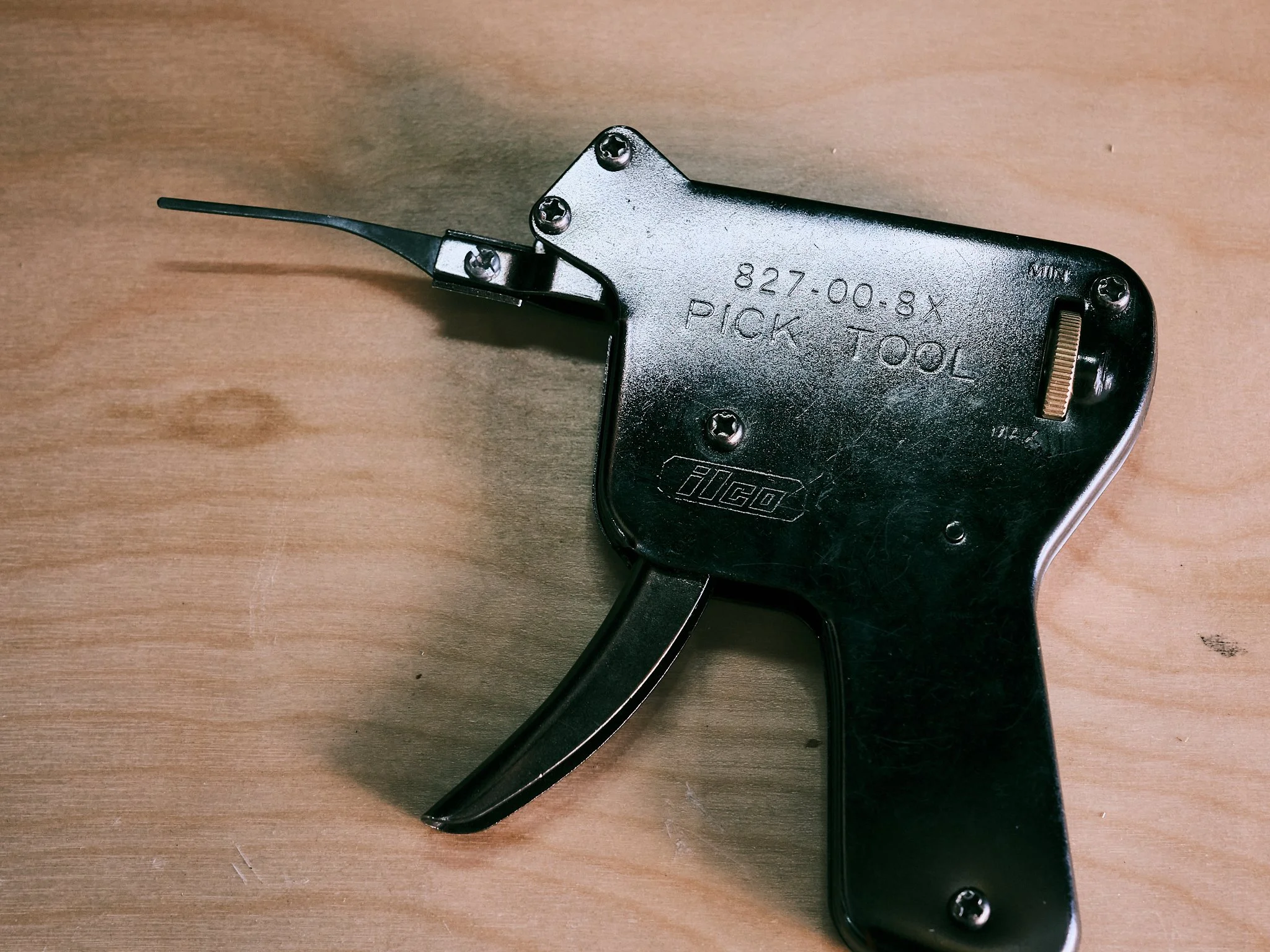
Only SSIA certified locksmiths can purchase and use a pick tool.
4. Reviews and Reputation
Check Google reviews, not just the star rating but the content of them. Look for patterns: do people mention fair pricing? Professionalism? Did the locksmith show ID on arrival? Recent reviews carry more weight than older ones.
Also pay attention to how the business responds to negative reviews — a professional, non-defensive response to a complaint says a lot.
5. Response Time and Availability
A good locksmith should be upfront about how long it will take to reach you. If they promise 15 minutes and arrive an hour later (a surprisingly common issue with dispatch-heavy operations), that's a sign they oversold their availability.
For emergency situations especially, ask directly: "Who is coming, and how long?" A local operator can usually answer that specifically.
6. Insurance and Liability
Locksmiths work on your property. If something goes wrong — a damaged door frame, a broken lock cylinder — you want to know they carry liability insurance. It's a reasonable question to ask before letting anyone start work.
7. Professionalism on Arrival
When the locksmith shows up, they should:
Be able to identify themselves clearly
Show ID or a business card
Ask to see proof that it's your home or property before proceeding
Explain what they're going to do before they do it
If a locksmith doesn't ask for any proof of ownership before unlocking your door, that's actually a red flag from a security standpoint — it means they'd do the same for anyone.
Hiring a locksmith doesn't have to feel like a gamble. A little due diligence goes a long way — check the reviews, confirm they're licensed and insured, and trust your instincts when they show up. A legitimate locksmith will always welcome your questions, never pressure you into unnecessary work, and treat your property with care. When in doubt, choose a local operator with a real address, a verifiable reputation, and the professionalism to back it up. Your home's security is worth taking the extra five minutes to get it right.