
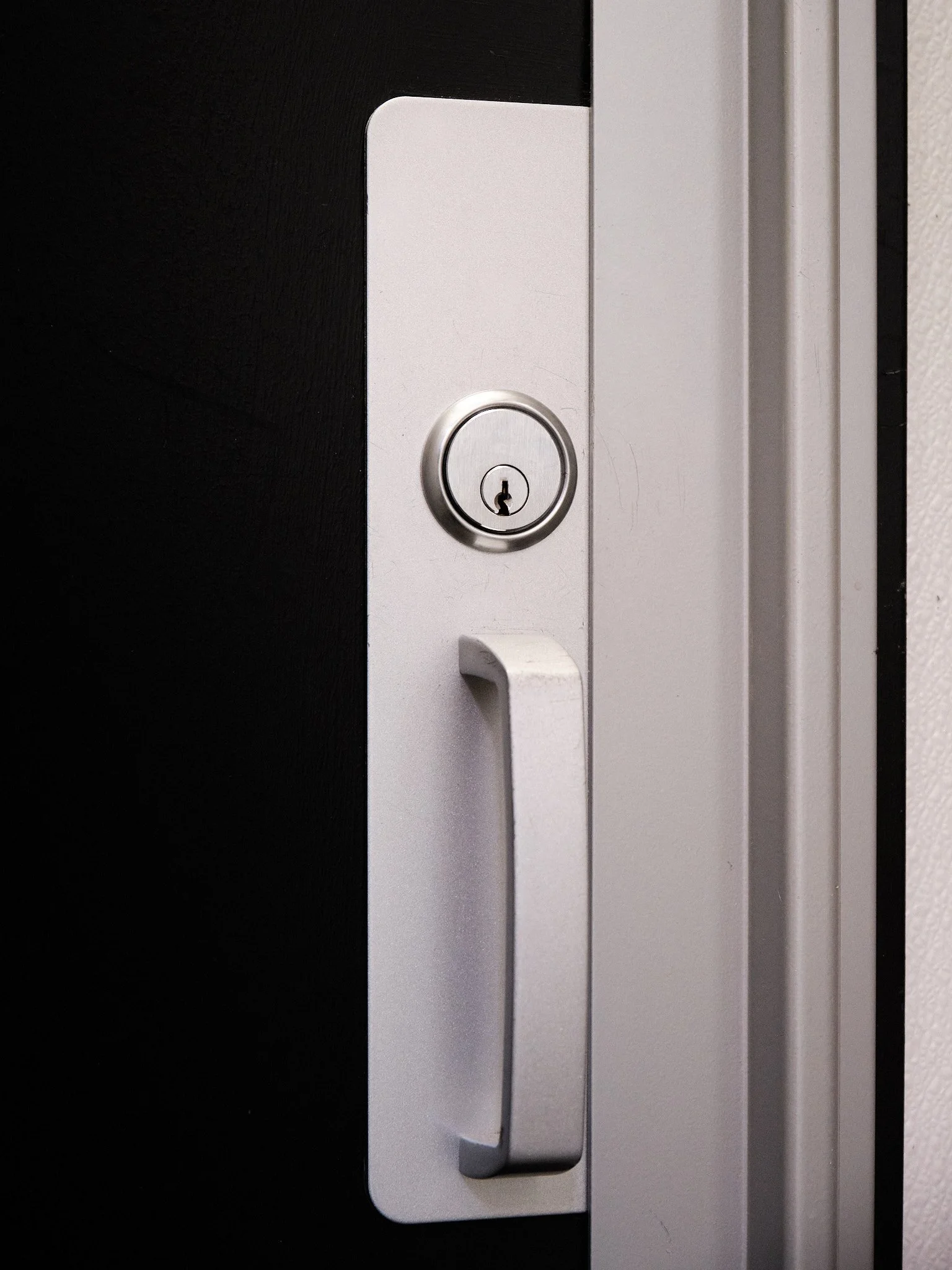
Security Upgrades in Edmonton
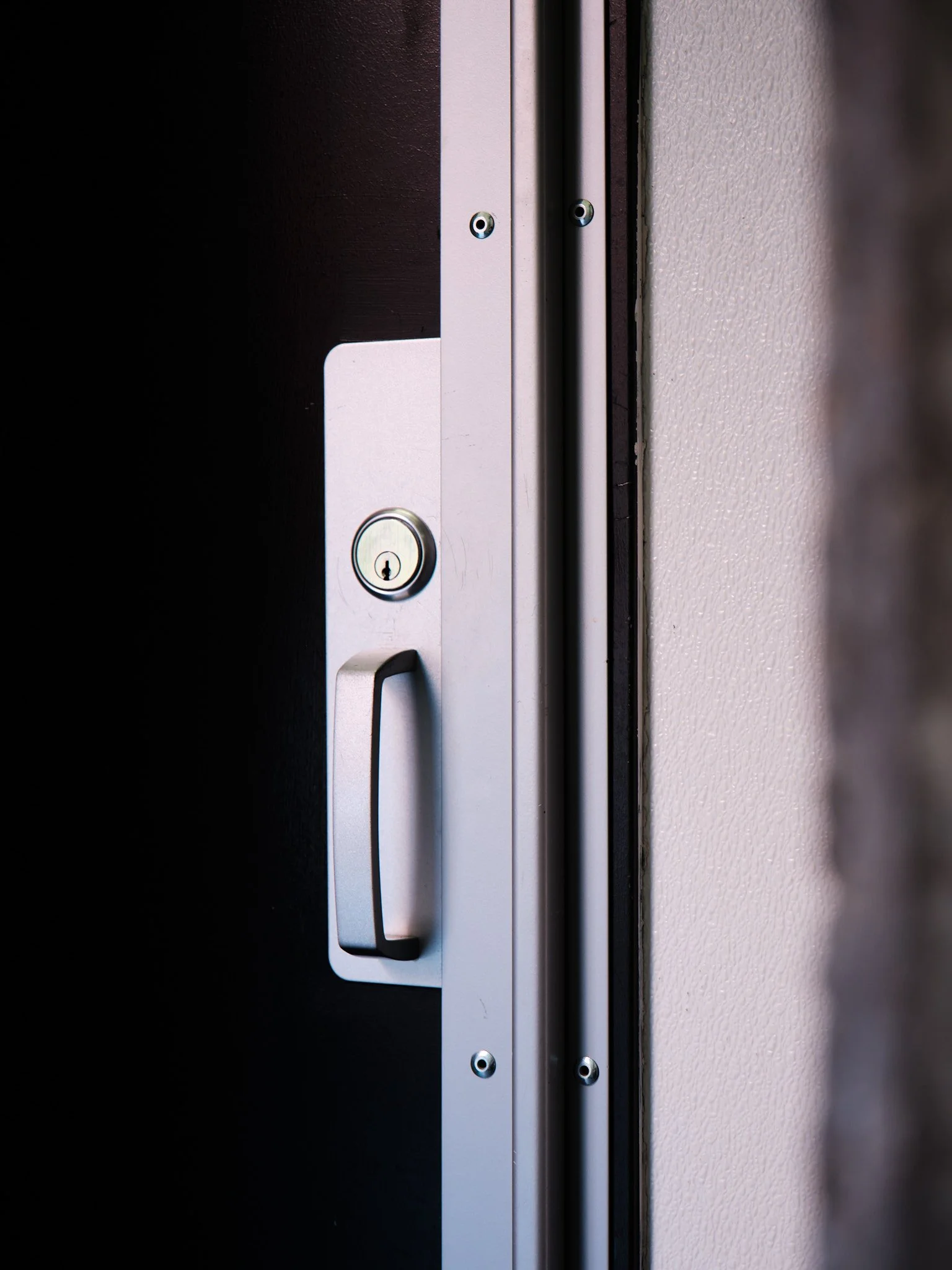
Most break-ins are not skilled work. Someone tries a door, finds a gap or a weak point, applies a pry bar, and is inside in under a minute. The doors that don't get opened are usually the ones where there was nothing to get a bar into.
That's what security hardware does. It removes the purchase point. Ace Locksmith Services supplies and installs forced-entry protection for commercial and residential properties across Edmonton — apartment lobbies, retail storefronts, office entrances, warehouses, and private homes.
The deterrent works
This is the part people underestimate. Someone assessing a door makes a judgement in a few seconds: is there a gap, does the frame look solid, is the latch exposed. A door with a heavy astragal or an interlocker reads as a door that isn't going to open quietly, and most attempts end there — at the looking stage, before anything is touched.
That matters for a property manager because the cheapest break-in is the one that doesn't happen. There's no damaged frame to repair, no incident report, no tenant who no longer feels safe in the building.
Double doors are the weak point
A pair of doors meeting in the middle has a seam running the full height of the opening. That seam is the easiest target on most buildings. A bar goes into the gap, the two leaves spread apart, and the latch slips past the strike without anything breaking.
Astragals
An astragal is a vertical strip of aluminum or steel mounted to the edge of a door, closing the gap where two leaves meet. With the gap covered there's nowhere to insert a bar, and the seam stops being a target. It also stops the light and air leakage you get through an uncovered gap, which is worth something in an Edmonton winter.
There are two types:
T-astragals mount to one leaf and overlap the other when the doors close
Split astragals mount to both leaves and meet in the middle
Which one suits your doors depends on how they're hung and how they're used. We'll tell you on site.
Interlockers
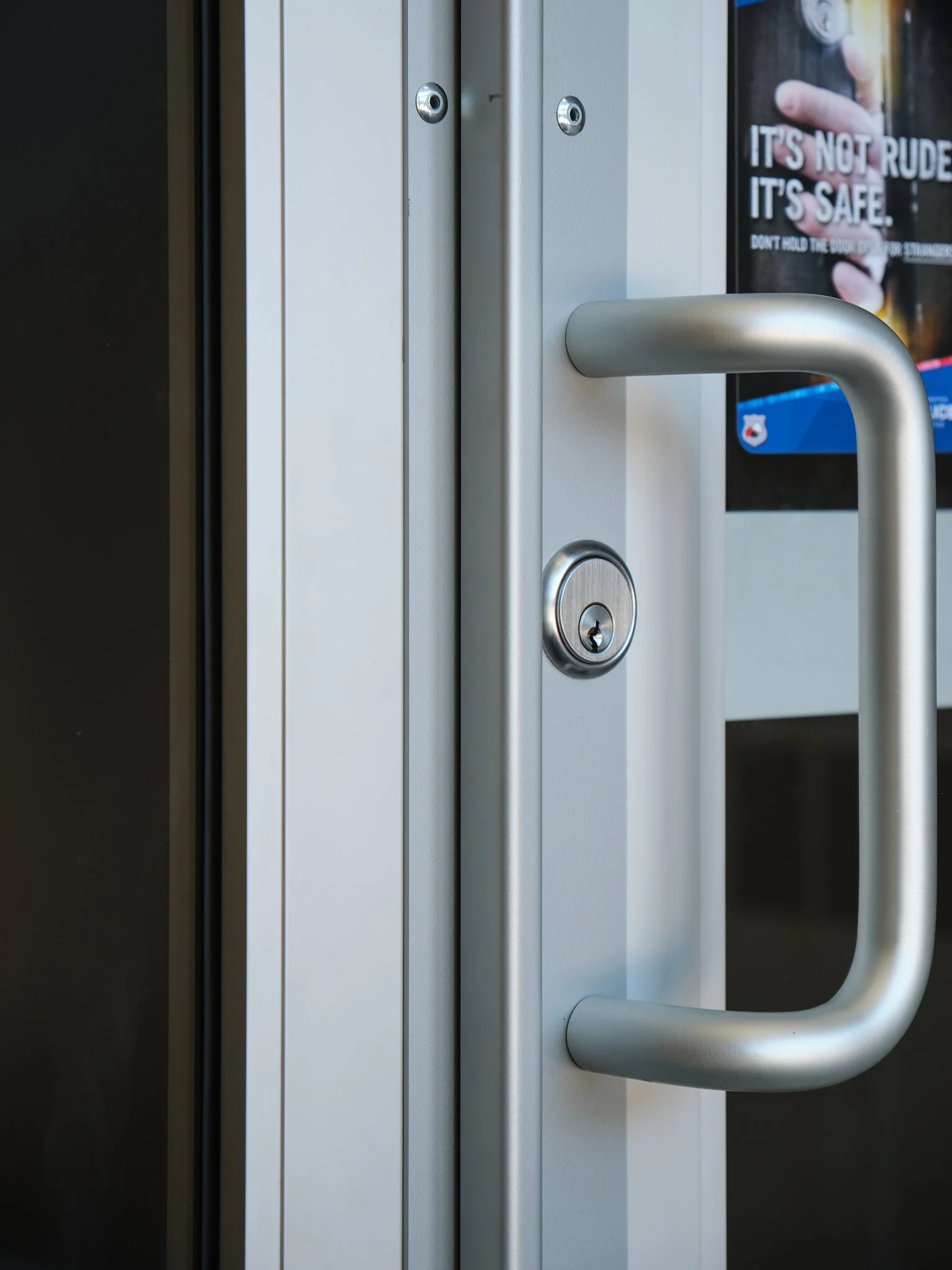
An interlocker goes further. Instead of covering the gap, it puts an interlocking profile on both leaves, so that when the doors close they hook into one another. Spreading the doors apart stops being possible without destroying them.
That leaves someone with two options, and neither works quietly. They can try to remove every screw holding the plate, on a door they're standing in front of. Or they can grind or cut through the interlocker itself, which takes long enough that someone hears. Both are a different proposition from a bar in a gap and thirty seconds of work, which is what an unprotected pair of doors offers.
We install these anywhere a door looks like the easy way in. The doors worth doing first are the ones with stock behind them, such as pharmacies, cannabis retail, sporting goods, electronics, and liquor. And the less noticed ones — side doors onto alleys, parkade doors, service entrances at the back, and lobby doors between the street and the fob reader.
If a door on your property looks weak, this is usually the answer.
Not all astragals are equal
If a building already has astragals, it's worth looking at what's actually on the door. A lot of what gets installed offers very little protection, and it's easy to tell the difference once you know what to look for.
Length. A short plate covering only the latch area protects one point on a seam that runs the full height of the door — bar still goes in above or below it. Full-length plates run the height of the door — 80" or 84"on standard doors. Covering the whole opening is what closes that gap.
One piece or interlocking. A single flat plate covers the seam but doesn't resist much once a bar is behind it. Two- and three-piece designs interlock when the doors close, so spreading the leaves apart doesn't separate the plates.
How it's fastened. This is the one most people miss. A plate mounted with ordinary screws can be pulled off with the same bar that would have gone in the gap. Carriage bolts passing right through the door, security fasteners, or a welded installation mean the plate is part of the door rather than attached to it.
Material. Light-gauge aluminum deforms under a bar. Heavy-gauge steel or stainless doesn't.
Which way the door swings. Inswing and outswing doors are attacked differently and need different hardware. An outswing door has its hinges and often its latch on the outside, which changes what needs protecting.
Single doors: the frame is usually the failure
On a single door, forced entry rarely defeats the lock. It defeats the frame. A kick splits the jamb around the strike and the deadbolt comes through with the wood still attached to it. The lock did its job and the building still got opened.
Reinforcing the strike side is inexpensive relative to what it prevents — a heavier strike plate anchored with long screws that reach the structural framing behind the jamb, rather than the short screws most doors ship with.
An exposed latch on an out swinging door can be reached with a pry bar or a shim, and a latch guard covers it.
When to look at your doors
You can see daylight or feel a draft between a pair of closed doors
The gap between your double doors can be reached from outside the building
There's a door on the property that nobody can see from the street
You've had a break-in, or an attempt, anywhere on the property
Your insurance provider has flagged the doors as a risk
The building is older and the frames have never been touched
Security gates
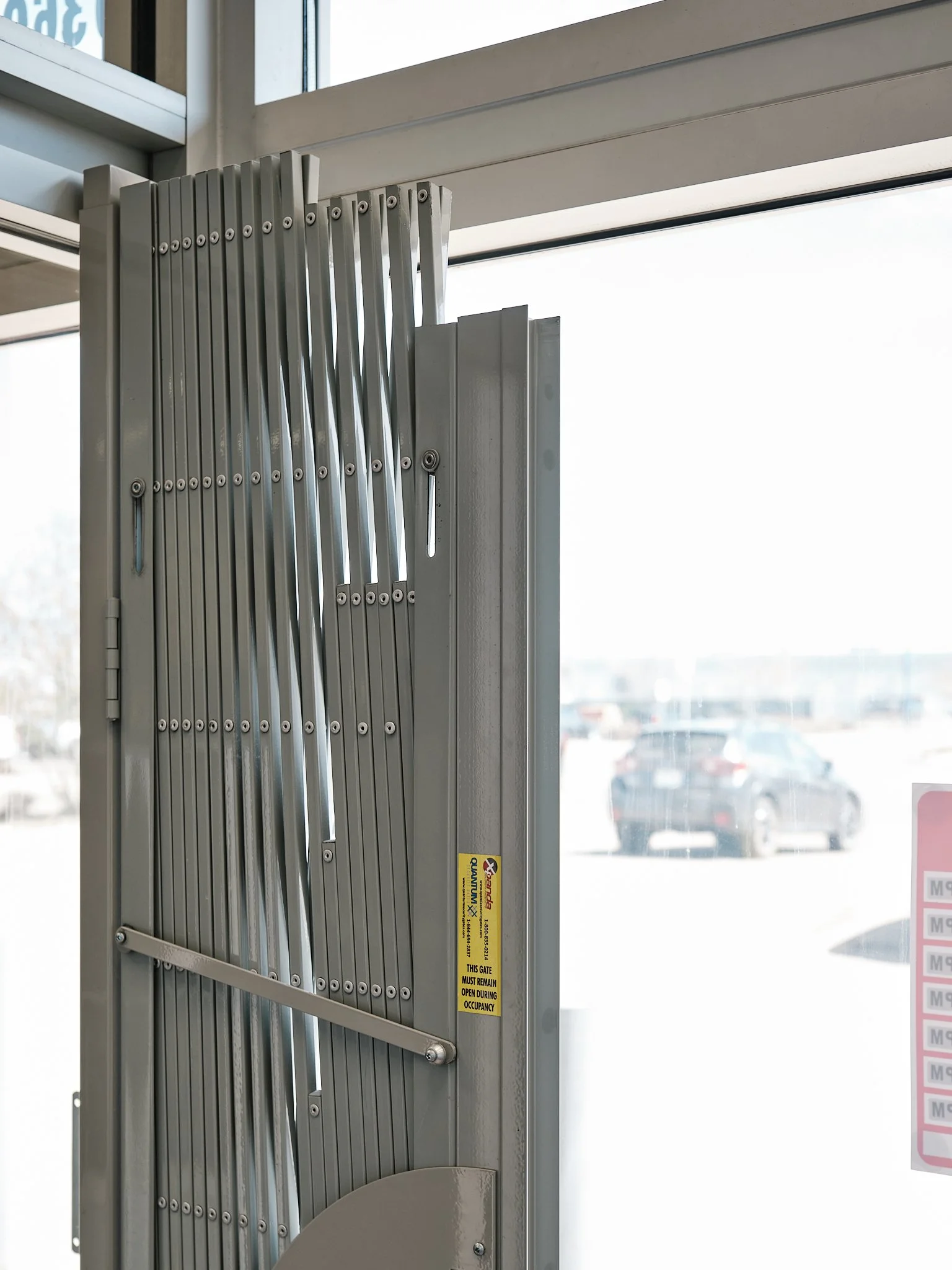
A gate is the only security measure people can see from the street, which is most of its value. Someone eyeing up a storefront sees a gate and stops assessing.
Scissor and accordion gates retract out of the way and suit storefronts, retail units, and interior hallways. They also cover wider openings — parking areas, loading bays, industrial entrances. Gates also give property managers restricted access to storage rooms, utility spaces, and parkade areas without the cost of an electronic system.
Parkades are worth singling out. They're the part of a building where break-ins happen most and get reported least — vehicles, storage lockers, and bike rooms, usually entered by someone who followed a resident's car through an open overhead. Hardware helps, but so does closing speed on the overhead, and whether the man door beside it latches every time.
Frequently Asked Questions
What's the difference between an astragal and an interlocker? An astragal covers the gap between two doors so a bar can't get in. An interlocker physically joins the two leaves together when they close, so they can't be spread apart. The interlocker is the stronger of the two.
Can these be added to doors we already have? In most cases, yes. We assess the doors, the frames, and how the doors are used, and recommend a product and mounting method that suits them.
Will it change how the doors open and close? Installed correctly, no. Poorly fitted hardware causes binding, so the fit matters more than the product. We check operation before we leave.
Do we need this if we already have good locks? A good lock resists picking and drilling. Forced entry doesn't bother with either — it works on the gap between doors or the frame beside the lock. They're separate problems with separate solutions.
Are astragals required by code? On some commercial applications, yes. We can advise on what's typical for your building type, and recommend confirming with your authority having jurisdiction on anything code-related.
Is this something we can do gradually? Yes, and most buildings should. Start with the exterior doors that face away from the street or a camera. Those get attacked first.
Call Ace Locksmith at (780) 999-0456 or contact us online about securing your doors.
Testimonials
-
"Joe came out to my clients home for a service call today. He was able to make it on short notice which I appreciated! The lock servicing itself was quick and he seemed knowledgeable about the old school type of lock we were dealing with as well. I would happily recommend Ace! :)"
Kat S.
-
"Excellent service. He was quick to provide a quotation and answer all my queries. He also came and installed the door lock and I am very impressed with his service and quality of work. Thanks!"
Danielle K.