
Door & Lock Repair in Edmonton
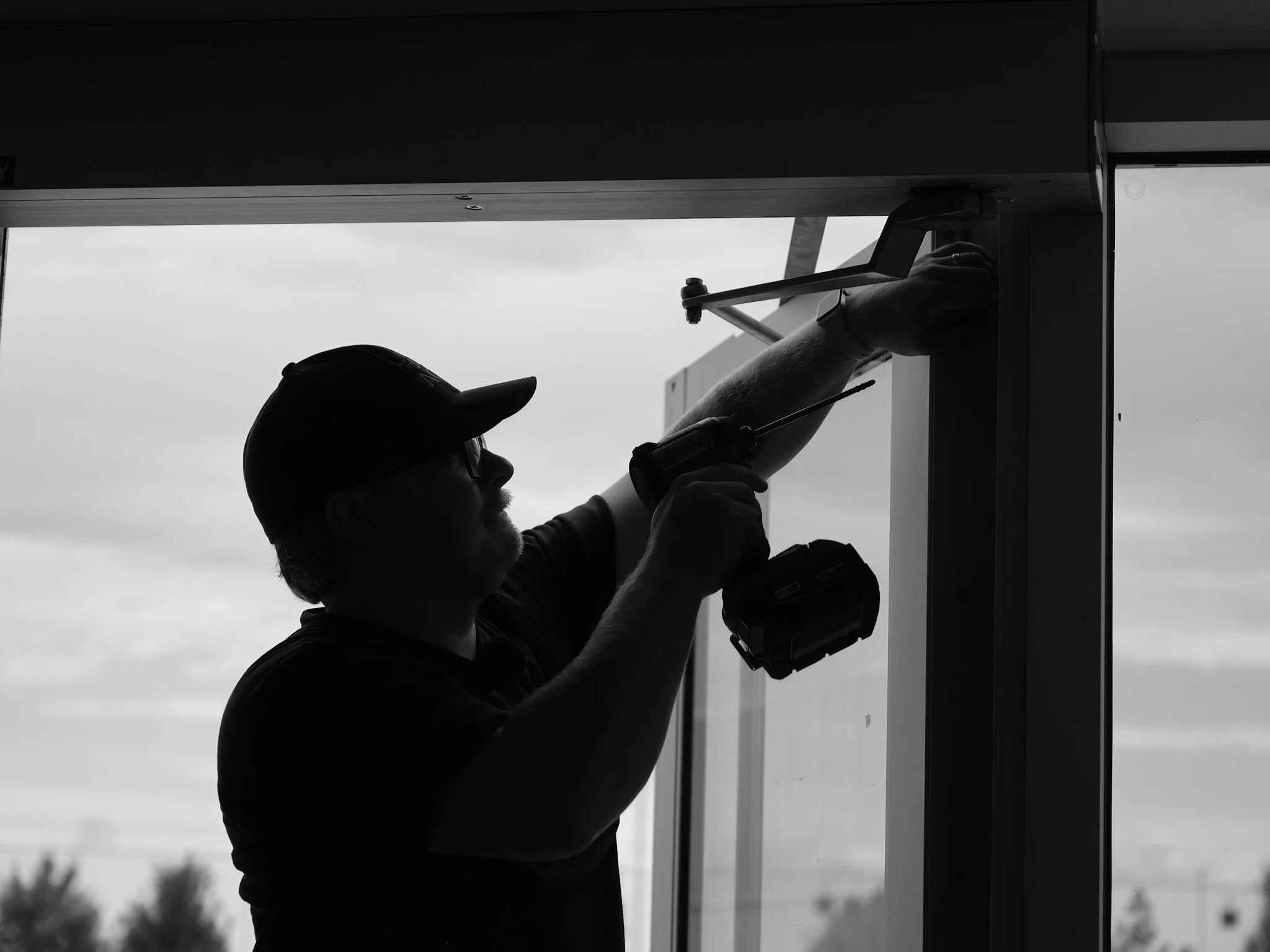
A door that doesn't close properly is a door that isn't locked. Ace Locksmith Services repairs doors, frames, and hardware for homes and businesses across Edmonton — usually in a single visit, and usually without replacing anything.
Most of what we see isn't a broken lock. It's a door that has moved, a frame that has shifted, or hardware that has been out of adjustment long enough to wear.
Problems we fix
Doors that stick, rub, or need a shove to close
Doors that swing shut but don't latch
Latches or deadbolts that won't line up with the strike
Doors that slam, or don't close all the way
Sliding and patio doors that drag or won't lock
Locks that are stiff or hard to turn
Keys that break off or get stuck in the lock
Worn cylinders, mortise locks, and multi-point systems
Commercial panic bars and exit devices
Why Edmonton is tough on doors
Buildings here move more than they do most places. A frame that goes from minus forty in January to plus thirty in July expands and contracts through that whole range, and the ground underneath does the same thing. Foundations settle and heave with the frost. Steel frames shift. Wood swells with humidity and shrinks again when the furnace comes on.
The result is that doors which were hung perfectly go out of alignment on their own, over a few seasons, with nobody doing anything wrong. A door that stuck last February and was fine by May will stick again next February, a bit worse, until someone adjusts it.
For a property manager, this shows up as the same complaint from the same suite every winter. It's usually a twenty-minute fix that nobody has made.
Door strikes and plates
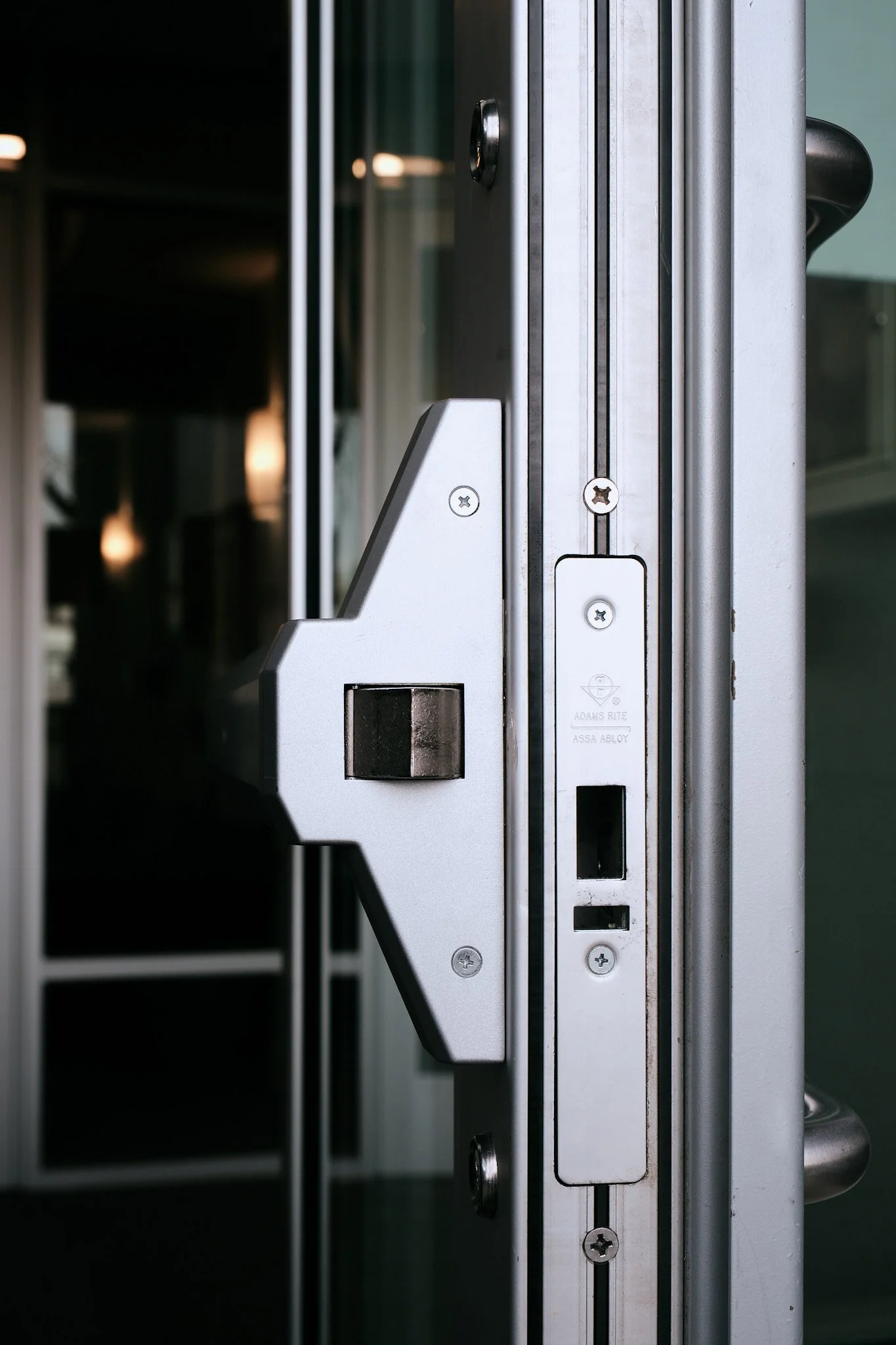
The strike is the metal plate on the frame that the latch or deadbolt goes into. When a door starts to sit differently, the latch stops lining up with the hole, and you get a door that has to be pulled or leaned on before the lock will turn.
We realign or replace strikes so the latch enters cleanly without force. On exterior doors we'll usually recommend a heavier strike anchored into the framing behind the jamb while we're there — it costs very little on top of a visit that's already happening, and it's the single biggest improvement you can make to a door's resistance to being kicked.
Doors that rub
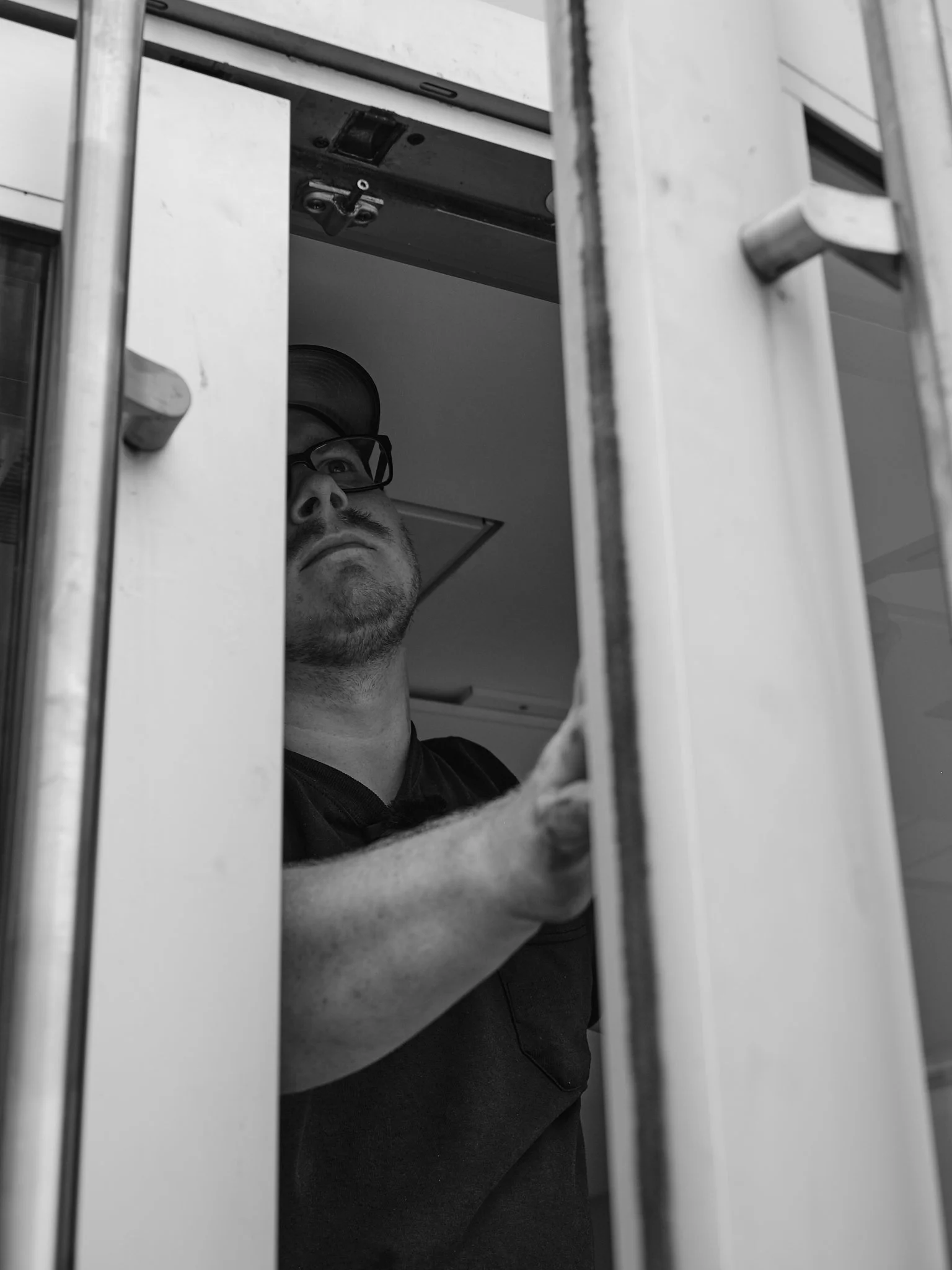
A rubbing door touches the frame or the threshold as it swings. You'll see it as a worn line on the paint, or hear it as a scrape near the top or bottom corner.
The cause is nearly always hinge sag or frame movement. Heavy commercial doors pull on their top hinge over years of use, and the door drops on the latch side. We adjust or shim the hinges, replace worn hinge pins, and where the frame itself has moved, adjust the door to suit the frame it now sits in.
Left alone, rubbing wears the door edge, then the weatherstripping, and eventually stops the latch from reaching the strike at all.
Doors that stick or bind
Sticking is different from rubbing. A binding door needs real force to open or close, and it usually gets worse and better with the seasons.
Common causes are swelling in humid weather, paint build-up on the edge, a frame that has racked out of square, or hinges that were shimmed to fix something else. We diagnose which one it is before touching anything, because planing a door that was only swelling leaves you with a gap for the rest of the year.
Doors that slam
A slamming door is a closer problem, not a door problem. Closers control the speed of the swing and the final latching push, and they go out of adjustment as the fluid inside them ages.
Slamming is worth fixing beyond the noise. Repeated impact loosens hinges, cracks frames, and shortens the life of every piece of hardware on the door. In multi-tenant buildings it's also one of the more common noise complaints, and it's cheap to solve.
Latches that don’t catch
A door that swings shut and bounces back open has a latch that isn't reaching or isn't entering the strike cleanly. Sometimes it's the latch itself — a worn spring, a bent bolt, debris in the mechanism. More often the latch is fine and the door has moved.
This one matters more than it looks. A door that appears closed and isn't latched is an unlocked door, and it's a common finding after a break-in where nothing was forced at all.
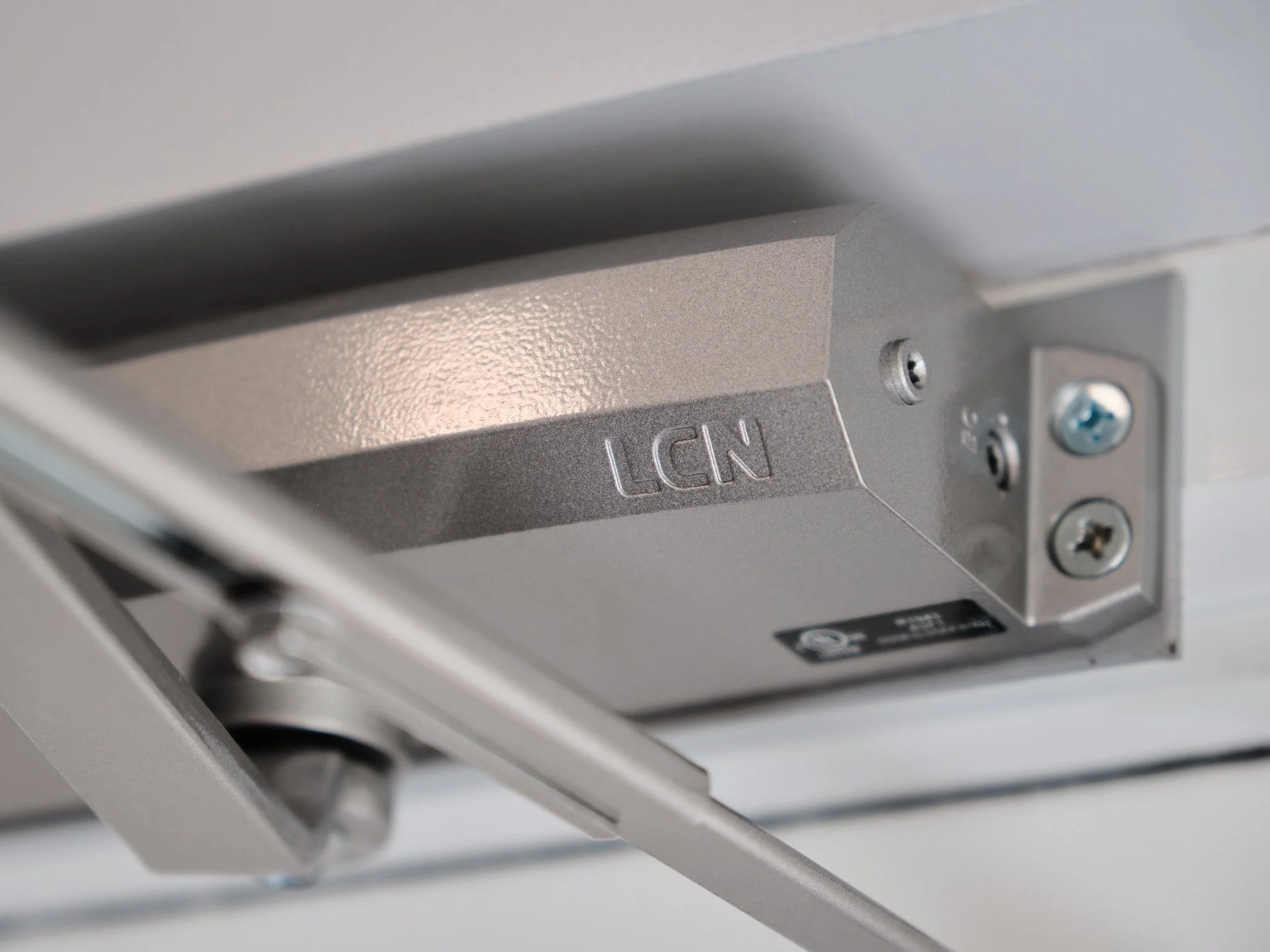
Door closers
Closers do more than stop a door slamming. On a fire-rated door, the closer is what makes the door do its job — a fire door propped, dragging, or not latching fully is not a fire door.
We repair and install closers on commercial doors, adjust closing and latching speed, and set back-check on doors that get flung open into a wall. If a closer is leaking oil it can't be adjusted back into spec and needs replacing; we'll tell you which situation you're in.
Locks that stick or feel rough
A key that needs jiggling or a lock that turns hard is usually telling you one of three things.
Sometimes the lock is fine and the door is binding — if the bolt is under pressure because the door has shifted, the lock feels stiff even though nothing's wrong with it. Sometimes it's the key rather than the lock: a key copied from a copy loses definition each time, and eventually it isn't cutting the pins to the right height. And sometimes it's the cylinder itself, dry or full of grit.
One thing worth knowing — don't spray a lock with WD-40. It's a solvent, not a lubricant. It'll free things up for a week and then leave a residue that attracts dirt and gums the cylinder worse than before. Graphite or a dry PTFE spray is what a lock actually wants.
In winter, moisture in a cylinder can freeze and make a lock feel seized. That one usually resolves itself, but a lock that freezes repeatedly is letting water in and worth looking at.
Broken and stuck keys
Keys rarely snap without warning. Almost always the lock had been getting stiff, someone applied more force, and the weakest point gave way — which is why a broken key is usually two problems, the extraction and whatever was making the lock hard to turn.
We extract broken keys without damaging the cylinder, cut you a replacement, and fix the underlying cause so it doesn't happen again on the same door.
If it happens to you, resist the urge to fish it out with tweezers or glue. Tweezers push the fragment deeper past the pins, and adhesive gets into the mechanism and turns a ten-minute job into a cylinder replacement.
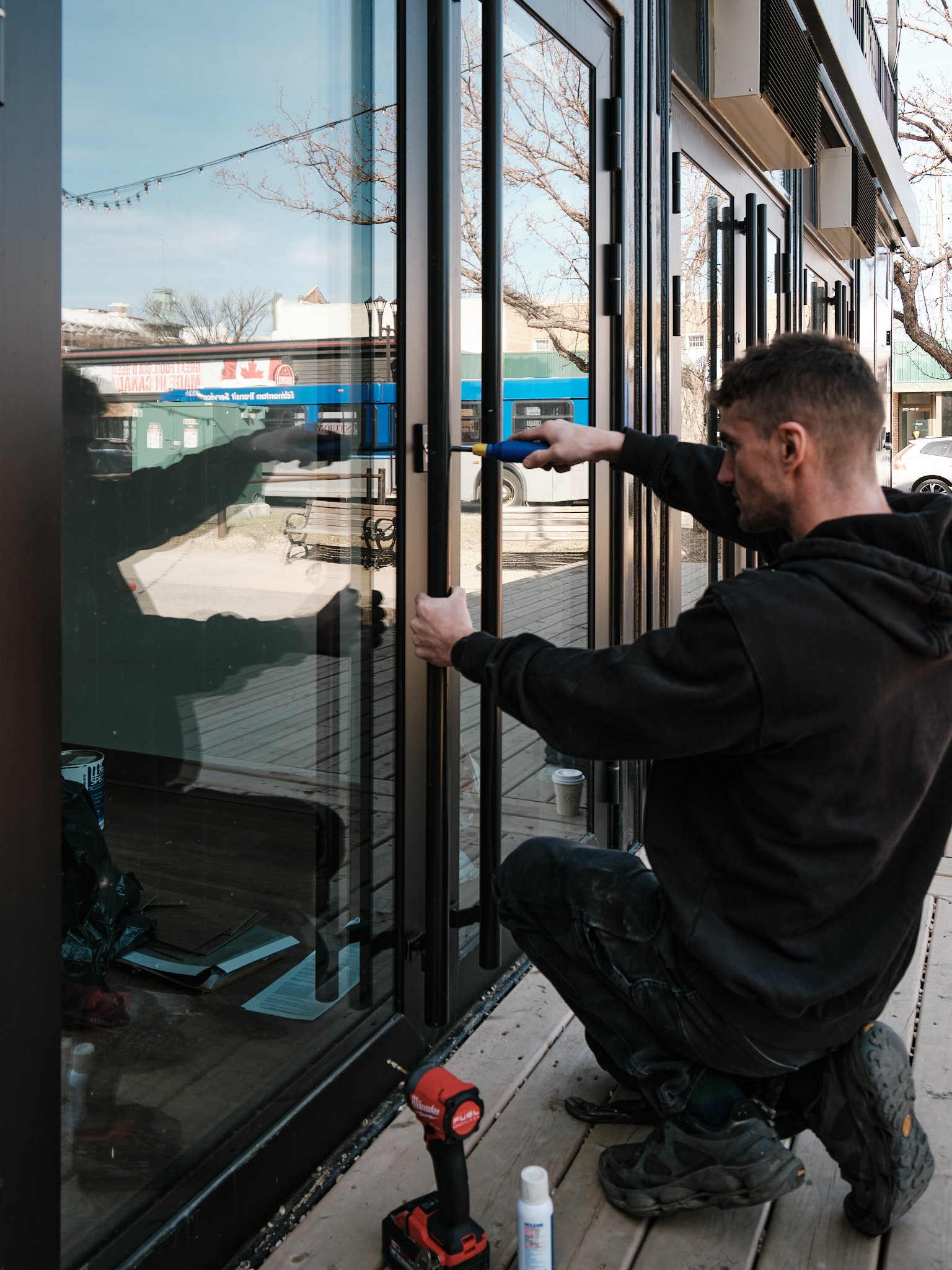
Worn cylinders
A cylinder that has to be held at a particular angle, or that only works with one specific copy of the key, is worn past adjustment. So is one that leaves metal dust on the key.
The useful thing here is that a cylinder can usually be replaced on its own, without changing the handle, the lockset, or the door prep. It's a fraction of the cost of new hardware and the door looks unchanged. It also means we can key the new cylinder to your existing keys, or bring it onto a master key system if you have one.
Preventative maintenance
Most of the above is cheaper before it's a problem. If you manage several buildings, a walkthrough before it freezes catches these while they're still adjustments — we do scheduled maintenance for property managers.
Commercial door hardware
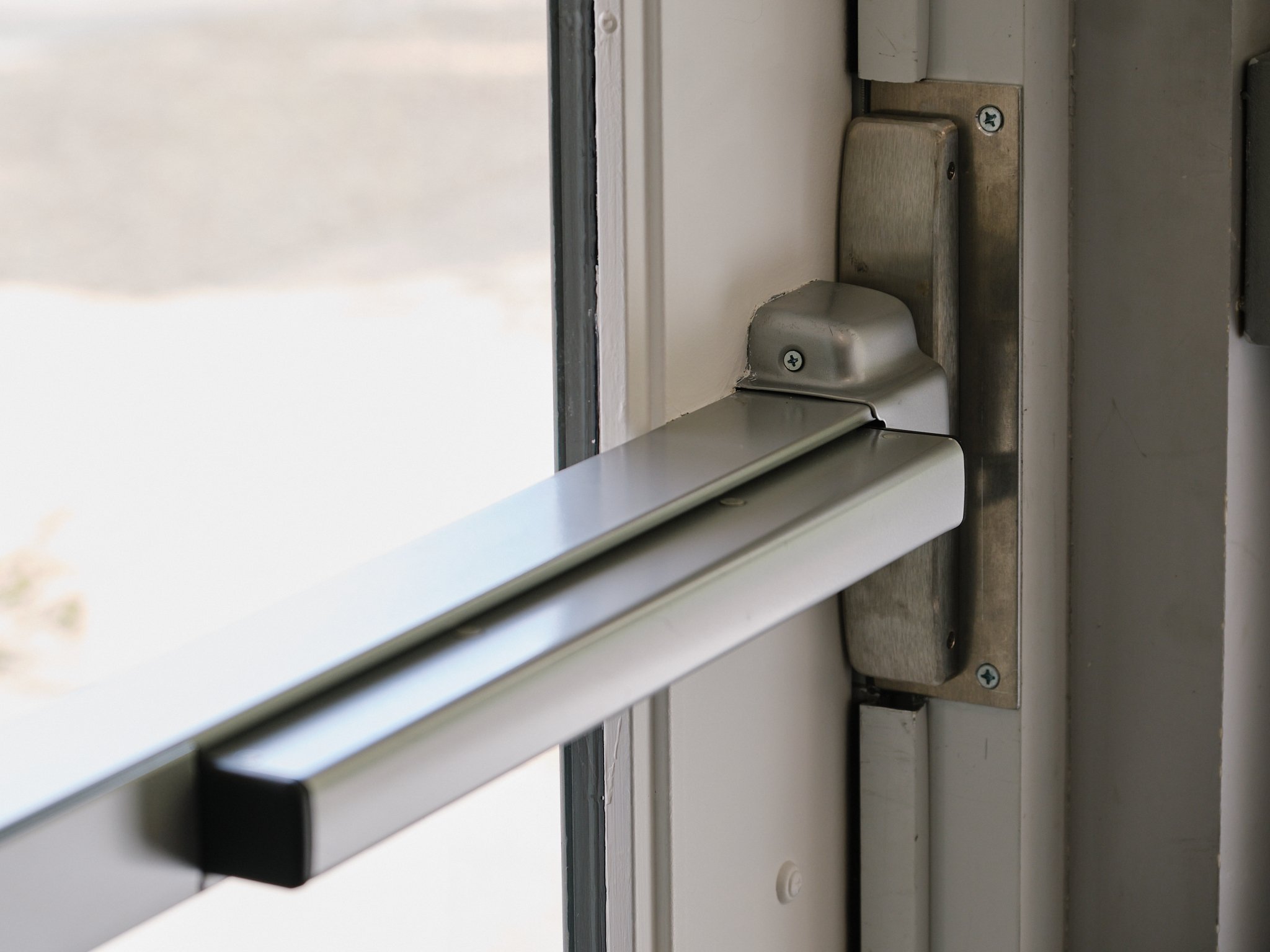
Commercial doors take more abuse in a month than a house door takes in a year. We work on panic hardware and exit devices, mortise locks, multi-point systems, electric strikes, and heavy-duty closers.
Exit hardware deserves particular attention. Panic bars are life-safety equipment and have to function on the first push, every time. If a bar is sticking, binding, or needs a shoulder, it should be looked at.
Frequently Asked Questions
Can you repair a lock instead of replacing it? Usually. We try repair first and only recommend replacement when a lock is too worn to work reliably. Replacing hardware is the more profitable job for us, which is exactly why we'll tell you when it isn't necessary.
Why does the same door keep sticking every winter? Because the building moves seasonally and the door has been adjusted to suit summer. Adjusting it to work across the full range is a different fix from adjusting it to work today.
My door closes but doesn't lock unless I pull it. Is that the lock? Almost never. It's the latch not lining up with the strike, which means the door or the frame has moved. It's a quick fix and worth doing, because a door in that state is often left unlocked.
Do you repair doors after a break-in? Yes. We repair or replace damaged frames and hardware and get the opening secure again.
How quickly can you come out? Call us and we'll get you into the schedule. In many cases we can be there the same week, and often sooner.
Do you work on commercial doors? Commercial door hardware is a core part of our business — panic hardware, closers, mortise locks and multi-point systems on high-traffic doors.
Call Ace Locksmith at (780) 999-0456 or contact us online about a door repair.
Testimonials
-
"Friendly, professional service from Jo. I will use Ace again."
Miles D.
-
"Excellent same day service! I used them to replace an entrance door lock in my rental unit. Fast, efficient, professional. Would highly recommend!"
Cakes